Bridging the Workflow Gap in Healthcare Appointment Management
Redesigning the core appointment workspace for a leading US healthcare platform to eliminate spreadsheet dependency and improve clinical efficiency.
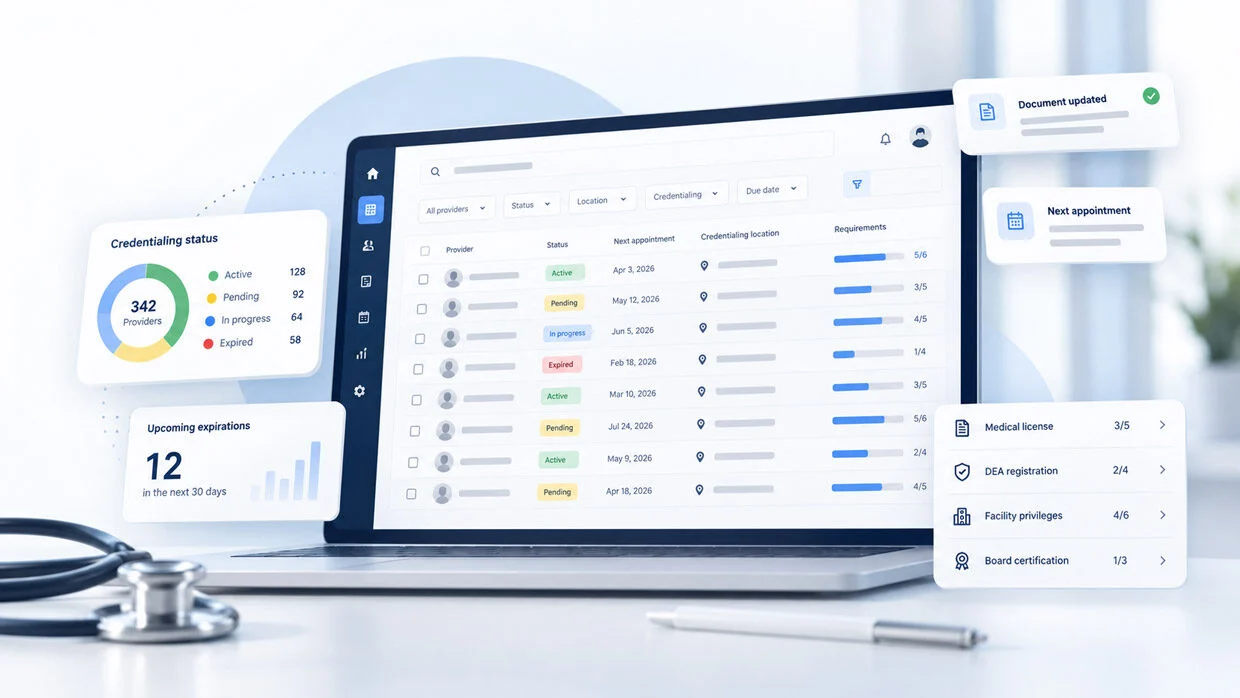
The 'Shadow' Spreadsheet System
Despite having a centralized platform, clinic coordinators were managing daily operations through complex Excel spreadsheets. The internal tool was viewed as a 'system of record' — somewhere to click at the end of a task — rather than a 'system of work' that actually facilitated the workflow. This led to data fragmentation, increased risk of clinical errors, and massive administrative overhead.
Contextual Inquiry & User Shadows
We shadowed clinic coordinators in high-volume facilities. We observed that the primary obstacle wasn't lack of features, but the lack of 'high-density' information. Excel allowed them to see 50 patients at once and make bulk edits; our platform forced them into a one-by-one detail view that broke their mental model of the day's operations.

"Coordinators don't manage appointments; they manage the flow of the entire clinic. The software needs to be a cockpit, not just a filing cabinet."
Information Density vs. Mental Load
We explored three conceptual directions: a 'List-First' approach focused on spreadsheet-like speed, a 'Calendar-First' approach for temporal visualization, and a 'Hybrid Workspace' that treated patients as dynamic cards in a responsive grid. The hybrid approach allowed for high-density scanning while maintaining individual patient context.
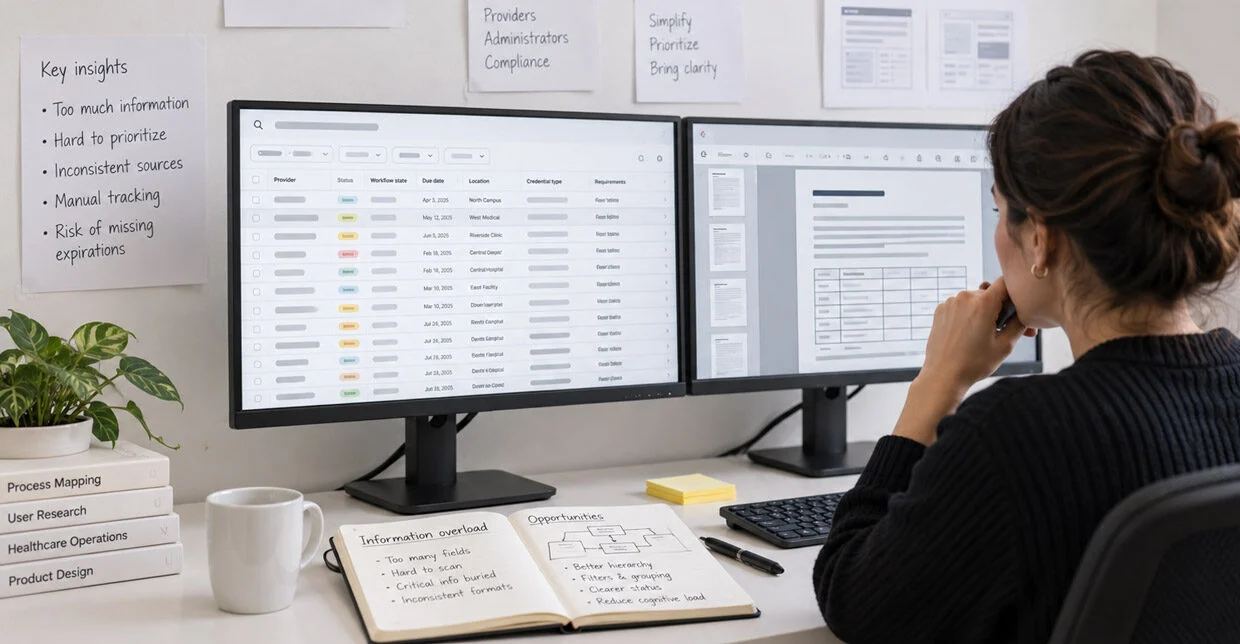
The Appointment Workspace
The final solution was a multi-modal workspace that bridged the gap between spreadsheets and relational databases. Key features included inline editing, customizable column density, and automated status triggers that mirrored the clinical workflow progression from Check-in to Discharge.
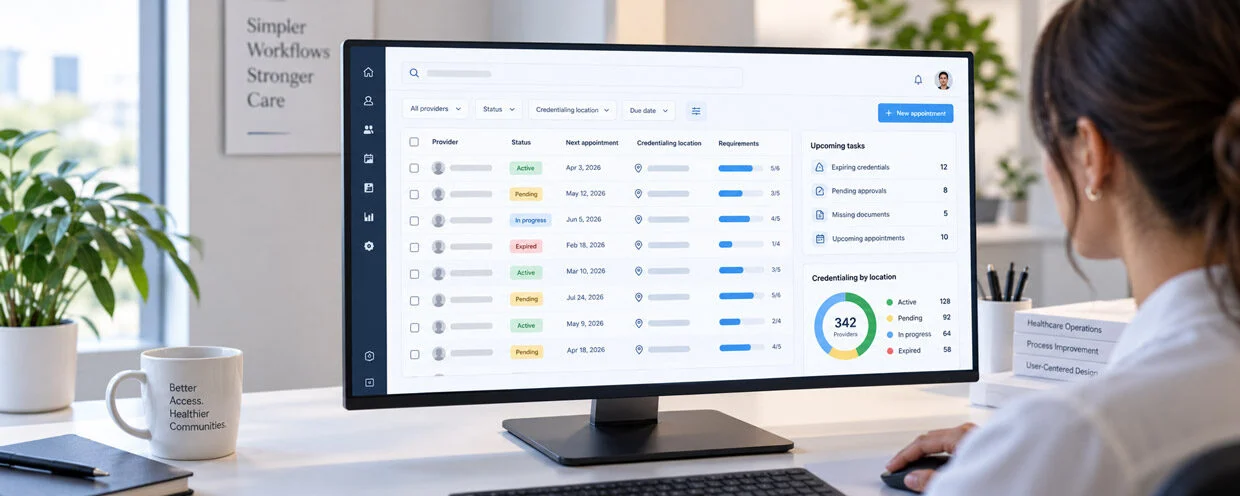
Before: The Friction
- Disconnected tabs for patient info
- Manual spreadsheet reconciliation
- High cognitive load to find errors
- Slow page transitions
After: The Flow
- Single unified workspace view
- Real-time automated sync
- Systematic error prevention
- Instant inline updates
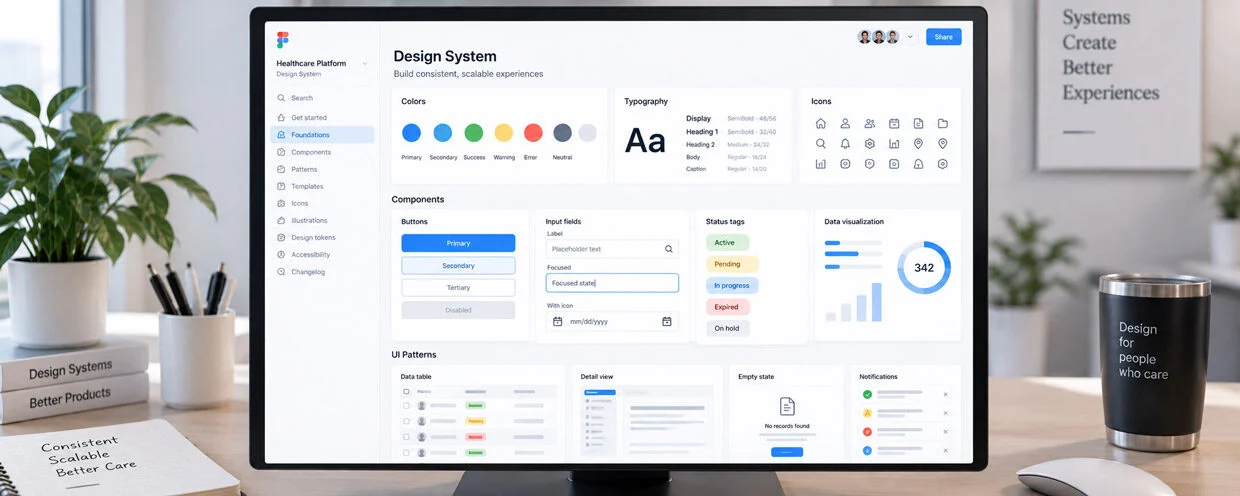
High-Density Pattern Documentation
We developed a custom grid component that allowed for 'coarse' and 'fine' detail toggles. This mirrored the coordinator's need to switch between high-level clinic monitoring and deep-dive patient problem solving without losing their place in the list.
Legacy API Synchronicity
The existing API didn't support partial updates for certain patient fields. I worked with the engineering team to design an 'Optimistic Update' UI pattern that maintained the perception of speed for the user while handling complex background sync operations without locking the interface.
Bridging Product and Engineering
Design isn't delivered; it's negotiated. Daily stand-ups and shared Figma-to-Code documentation ensured that the highly functional grid patterns were technically viable and maintainable for the long term.
Eliminating Shadow Systems
Post-launch usability metrics showed a significant shift. Clinic coordinators reported a dramatic reduction in external spreadsheet use. The platform became the primary workspace, leading to better data accuracy and faster patient throughput across pilot facilities.
The Value of Complexity
Working on this project reinforced that 'simple' does not mean 'minimalist.' In specialized enterprise tools, simplicity comes from matching the software's structure to the user's mental model, even if that model is inherently complex. Reshaping a legacy platform is as much about understanding people as it is about moving pixels.